The Story Behind Water-Filled Barriers


How a Cemented Past Inspired a New and Different Safety Product

Road barriers have been present on highways and construction sites for decades, safeguarding lives and directing traffic. So, in our mission to unveil the history of some of the most important and dependable road safety items, we didn’t want to skip on discovering how the waterfilled barrier came to be.

Today, we delve into this history, revealing their journey from a simple idea to a necessary safety item for our modern road and construction infrastructure.

A Concrete Start

The concept of barriers to separate lanes of traffic and protect against errant vehicles dates back to the early days of automobile transportation.

The first concrete median barriers made their debut in the mid-1940s on U.S. Route 99, near the Tehachapi Mountains in California. Their primary goals were to:

  • Reduce instances of trucks crashing through the barriers.
  • Eliminate the need for costly and risky barrier maintenance in accident-prone areas with narrow medians.

These are concerns that are still just as relevant today, almost 80 years later.

The Jersey Barrier

The first version of a concrete or precast barrier was the Jersey Barrier.
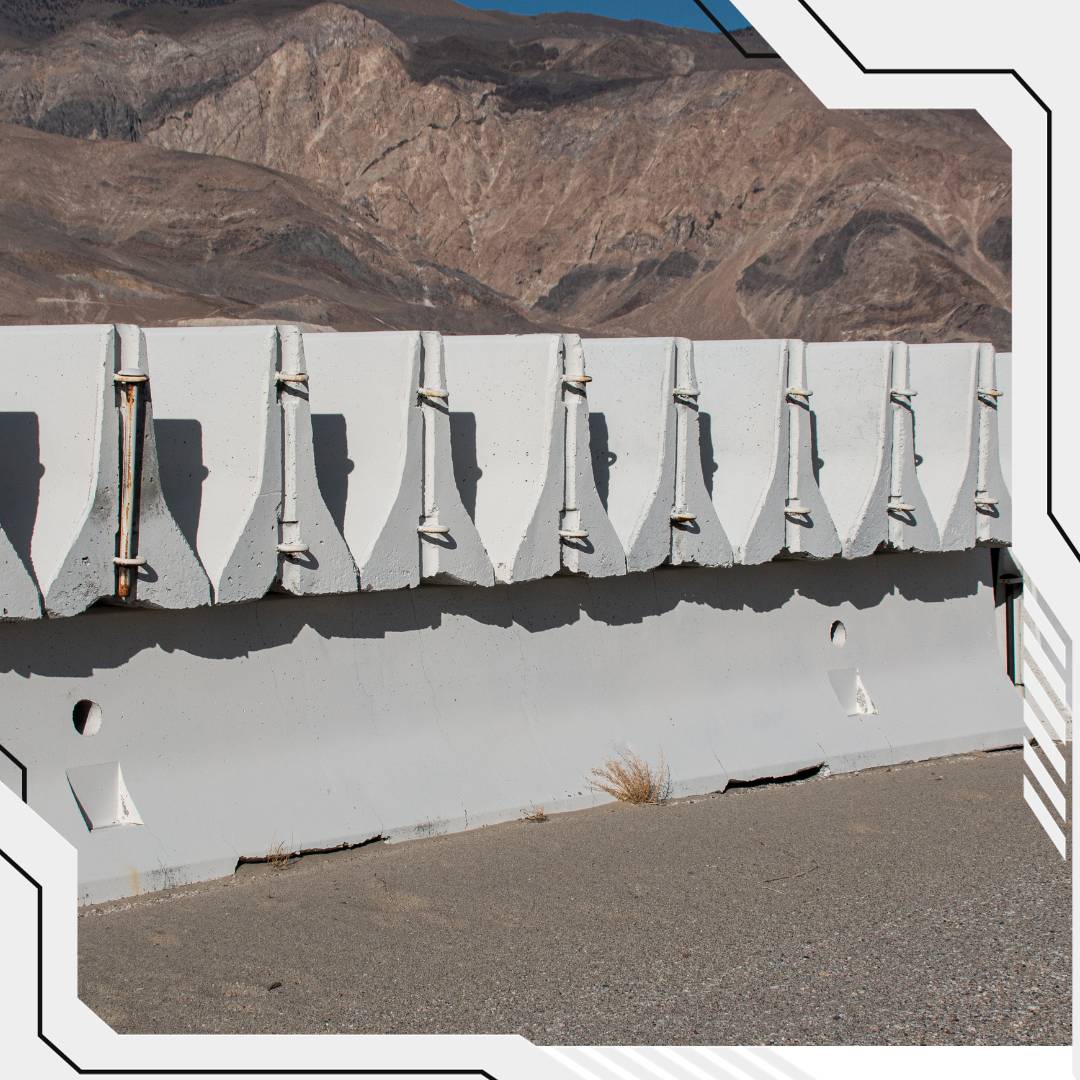
The Jersey barrier, also known as the New Jersey wall, had its beginnings in the 1950s and took its current form in 1959. It was developed at the Stevens Institute of Technology in New Jersey, USA, under the guidance of the New Jersey State Highway Department. These barriers were designed to separate multiple lanes on highways and have become a common sight.

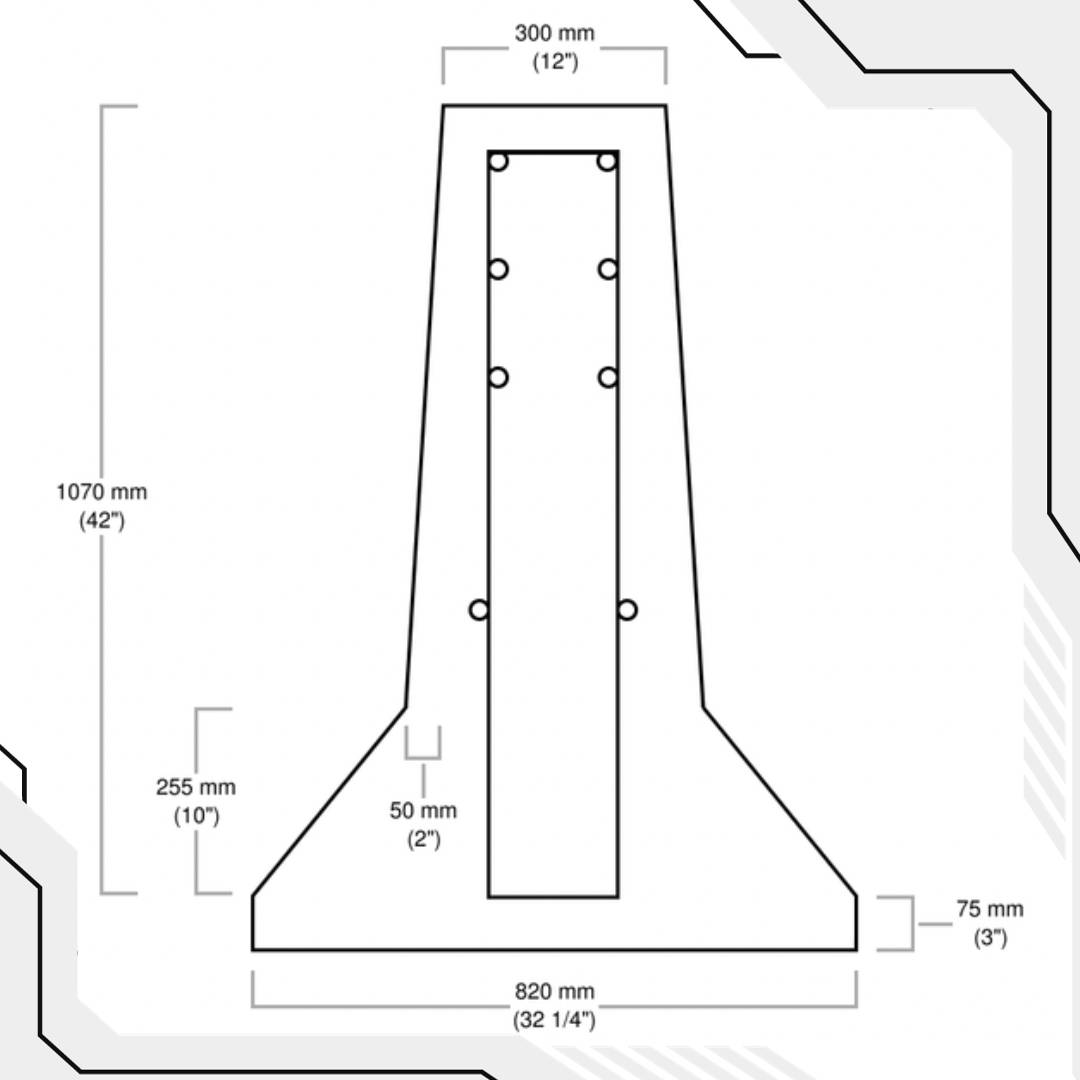
A typical Jersey barrier stands at a height of 81 cm and is usually made from steel-reinforced poured concrete. Many of them have embedded steel reinforcement protruding from each end, enabling them to be interconnected with fresh concrete sections for permanent placement.

The first barriers weren’t modular and were poured in place, much like curbs. These early versions, such as those on Route 46 in Bergen County and Passaic County, were notably shorter, usually around 61 cm tall. Some dividers on county or local roads might have been even lower since they replaced raised concrete rumble strips designed to discourage lane-to-lane crossings.

In cases of shallow-angle impacts, the barrier’s lower sloped face allows vehicle tires to ride up, minimising sheet-metal damage. Additionally, in head-on collisions, the barrier lifts and redirects the vehicle away from oncoming traffic and back into its original direction.

Image copyright: Wikipedia

Constant-Slope Barrier

A constant slope barrier is a traffic barrier crafted from reinforced concrete and characterized by a single, unchanging slope. It serves the purpose of separating lanes of vehicular traffic.

What sets it apart from more complex barrier shapes is its resilience to variations in roadbed height during repaving, making it a practical choice. This barrier has demonstrated crash test performance on par with that of the Jersey barrier.

The F-shape Barrier

The F-shape barrier, a modified concrete crash barrier derived from the Jersey barrier, was developed for highway traffic lane division with enhanced safety. The F-shape’s slope is similar but with a lower break point compared to the Jersey shape reducing vehicle lift and improving safety for lighter cars.

Through computer simulations and full-scale crash tests, the F-shape outperformed the traditional Jersey barrier. Strangely enough, the name “F-shape” originates from these successful tests rather than its shape.
However, despite its safety advantages, the F-shape didn’t replace the Jersey barrier due to the latter’s widespread use and existing investments in casting forms.

Jersey barriers can be converted into F-shape barriers with asphalt resurfacing, but this reduces effectiveness for heavier vehicles due to reduced working height.

Image copyright: Wikipedia

Since the original road barrier versions, safety engineers began to explore alternative materials and designs for barriers. This formed the inspiration to use the design in an alternative way for a different kind of safety product. One that could be used as a high-visibility deterrent rather than a permanent barrier.

Many different versions of concrete barriers have been adopted across the world. It also became apparent that a temporary version of this safety item was needed.
It was during the 1960s that the precursor to modern waterfilled barriers made its debut. The idea was simple but ingenious: rather than using solid concrete, engineers started experimenting with barriers that could be filled with water.

While substituting the material of solid concrete with plastic and water, engineers soon discovered that it would not suffice as a replacement. However, these barriers constructed were lightweight and easy to transport and install. They offered increased visibility and worked as an effective signal to be aware of potential danger.

Waterfilled barriers were especially valued for construction sites, temporary road diversions, and events, as they could be moved and repositioned easily. Their adaptability soon led to their widespread adoption by highway authorities and construction companies across the world.

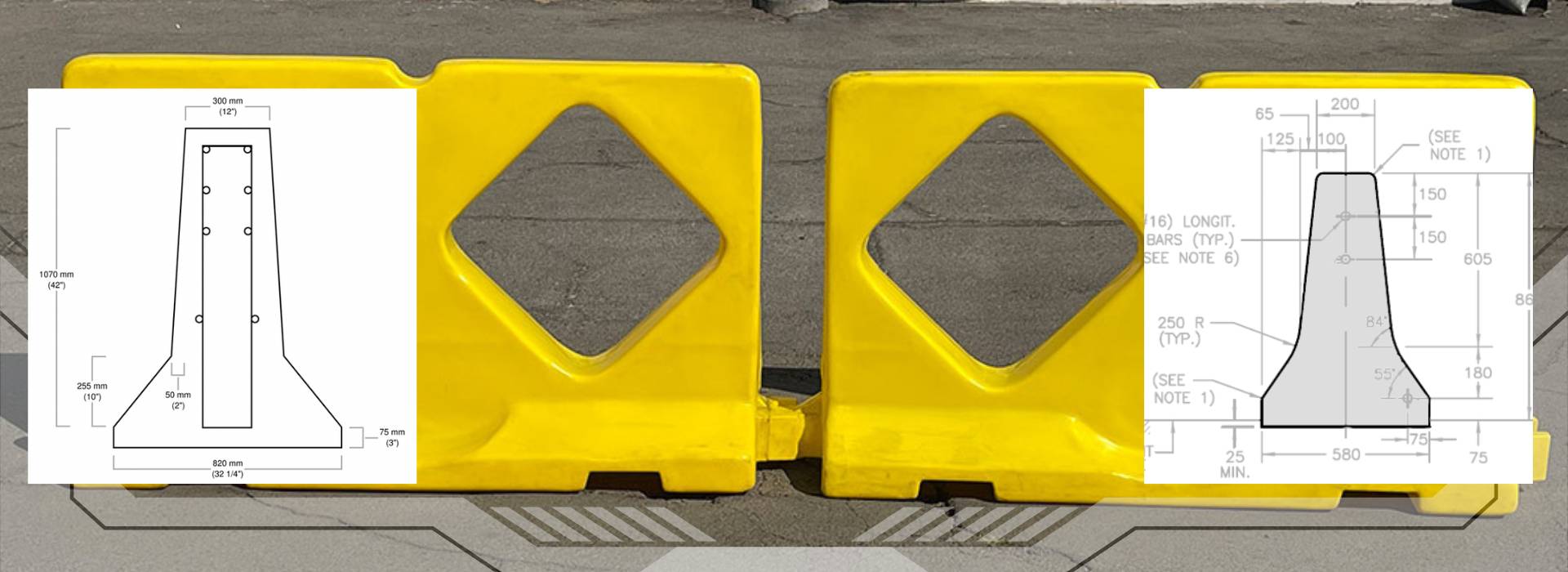
*NB*- Waterfilled barriers are a highly visible safety product used as boundary indicators in temporary construction zones. Although their concept has been born from concrete barriers, they should not be used as a replacement for cement barriers. They are effective deterrent items rather than impact-resistant objects.

Progress to Present

Over the years, advancements in materials and design have further improved the effectiveness of water-filled barriers. Modern iterations are typically made from recyclable polyethylene (like our barriers), making them more eco-friendly.

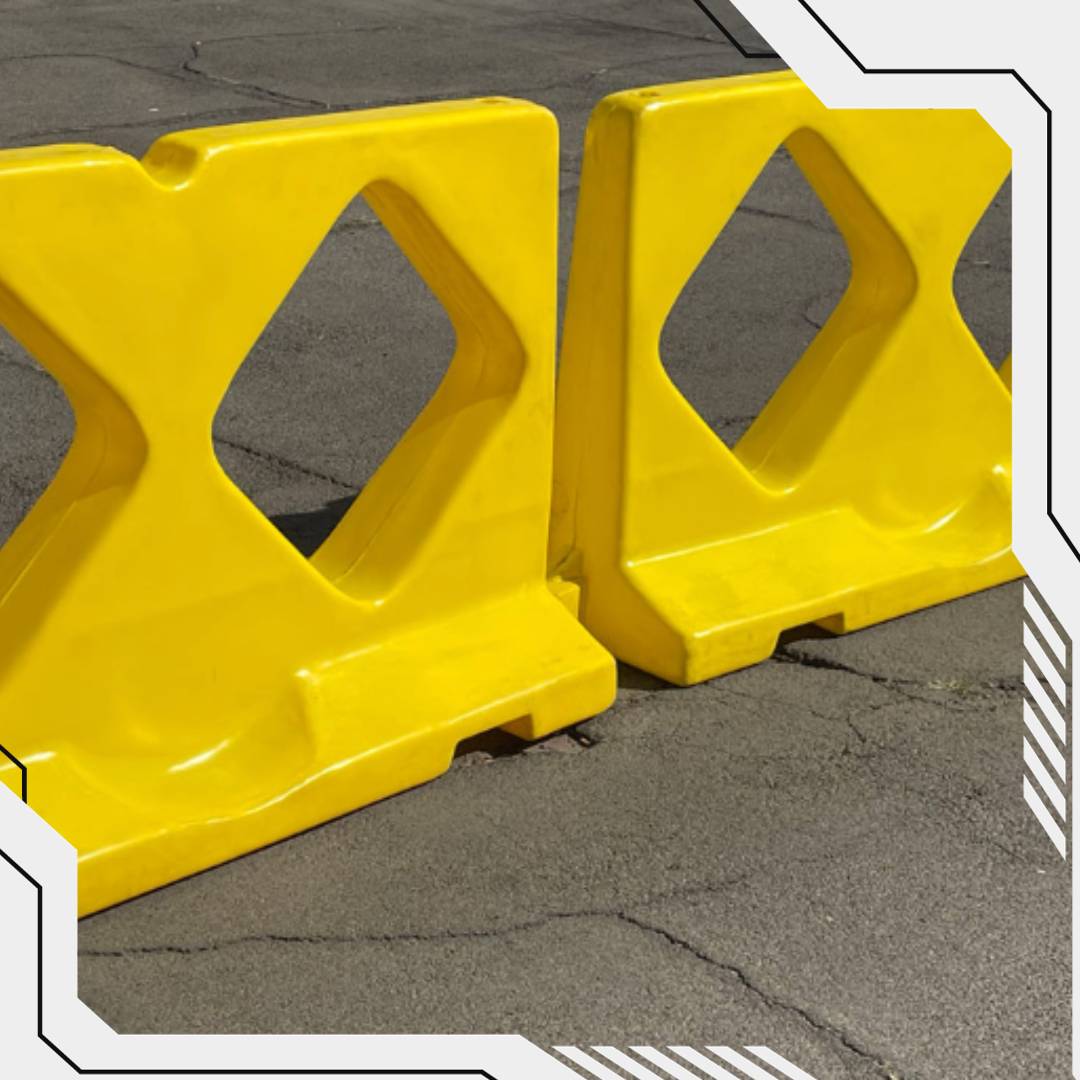
We at Venture Plastics Distributors take great pride in our product quality and our open-minded and creative side that always looks at new and interesting ways to improve designs. Our unique 2-meter by 1-meter water-filled temporary road barrier is no exception. These barriers offer specific design features to benefit customers:

  • Special Sandbag Allowances: They feature grooves on either side, allowing sandbags to be tied for added weight, making them suitable for sites without water access and providing stability even when not filled.
  • Overflow Hole: With a 150-litre capacity, these barriers actually remain secure with just 50 litres of water, saving time and effort during setup. That’s why we have included an overflow hole to prevent overfilling, promoting economic and ecological water conservation on sites.

When to Use Waterfilled Barriers

Waterfilled barriers are an adaptable road safety product. Ours are stackable, UV-stabilised polyethylene barriers used as boundary indicators in temporary work zones on the road.

Their interlocking nature makes them a safer alternative for keeping marked areas intact for longer. They are the perfect road safety product choice for alerting motorists, workers and pedestrians of potential danger.

Their bright yellow colour makes them extremely visible, even during low-light situations and at night.

Contact Us

010 023 7178

10 Log Road, Roodekop, Germiston, Gauteng 1422

Enquire Today


    * indicates a required field

    error: Content is protected !!