

When Should Road Studs Be Used?
The Traffic Department regulations dictate when and how road studs are appropriate. The basic premise is that if painted road markings do not provide enough visibility, use road studs.
Standard road markings may be ineffective if they do not offer enough retro-reflectivity in low-light situations. Due to their slight height above the road surface, the lenses on studs pass light back more efficiently. This provides better visibility.
Temporary road studs provide a cost-effective option for road markings on newly laid bitumen. When a new road is laid, paint cannot be applied immediately as the bitumen seeps into it. Road studs ensure road safety during this period by serving the same purpose as painted lines.

COTO Standards for Road Stud Use
The Committee of Traffic Officials (COTO) releases standard specifications on when road studs must be used. Their August 2020 Standards provide for three areas of application.
COTO Standard Road Stud Application 1 (RSA-1)
This provides for using road studs along a high trafficked centre line on narrow roads. A road is narrow if the lanes measure less than three and a half metres wide.
RSA-1 states that contractors must place road studs along the yellow shoulder line on single carriageways. This is only when the paved shoulder measures wide than one and a half metres.
This type of application usually requires a cast iron KLite KT 304 with shank.
COTO Standard Road Stud Application 2 (RSA-2)
This provides for using road studs on low to high trafficked single carriageways. The lane in each direction must measure at least three and a half metres wide.
RSA-2 dictates road stud use on undivided dual carriageways with two or more lanes in each direction.
Low trafficked yellow, and all white shoulder lines on both divided and undivided dual carriageways require road studs. As do all painted island and lane divisions at intersections.
This type of application usually requires a Plastic Stimsonite C80 stick on stud.
COTO Standard Road Stud Application 3 (RSA-3)
This dictates that high trafficked lane dividing lines on divided and undivided dual carriageways require road studs.
This type of application usually requires a 360 degree Armolite Glass road stud.
Road Stud Classification by Colour
According to the Department of Traffic, contractors may only use three road stud colours. Each colour is assigned a different meaning and prescribed for use in different situations. Plastic road studs have both a coloured body and coloured lenses. Here’s a quick-view guide to help you out.

Red Road Studs Mean Prohibition
As with most safety equipment, red means high alert. In the case of road stud classification, red signals lines a driver should not cross. Such as the white “no crossing” lines.
Red studs work for lines in the road centre prohibiting overtaking or the right edge line.

Yellow Road Studs Mean Warning
Knowing when to use yellow studs is luckily pretty simple.
Use them with yellow line markings unless they indicate a prohibited crossing requiring a red road stud.

White Road Studs Mean Guidance
As with the yellow, white road studs are used wherever there are white line-markings. Unless those require red studs.
The point of a white stud is to enhance the visibility of the road lines.
Road Stud Colour Combinations
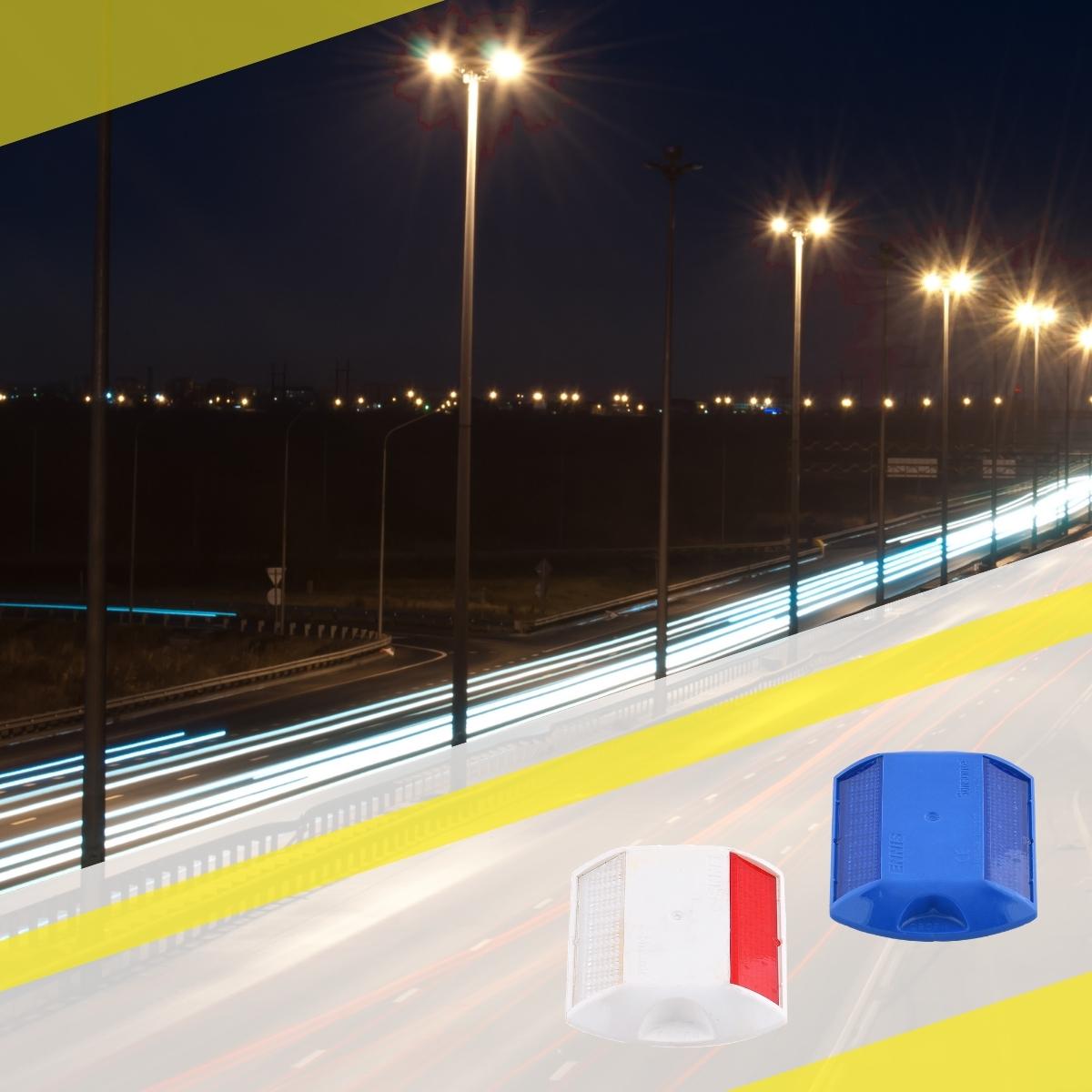
Venture Plastics Distributors supplies a range of colour combination road studs. These are compliant with the Department of Traffic regulations and act as indicators for traffic in both directions.

White and White Colour Combination Road Studs
These studs have both a white body and white lens. They are used on broken lines to indicate that drivers may safely overtake from either side.

Red and White Colour Combination Road Studs
These studs have a white body with a red and white lens on either side. They are used on centre lines with both broken and solid lines. The red lens faces traffic flow along the solid line to indicate that drivers may not overtake.

Red and Red Colour Combination Road Studs
These studs have a red body and red lenses on both sides and are used along solid centre lines. They indicate that drivers from both directions may not overtake or cross the lines.

Yellow and Red Colour Combination Road Studs
These studs have a yellow body with a red and yellow lens on either side. They are used along the shoulder line and enhance its visibility. The yellow lens faces oncoming traffic, and the red lens faces traffic in the opposite direction.
Road Stud Classification by Material
Colour is an essential consideration for the meaning a road stud communicates. However, road stud classification also depends on its material make up.
A road stud’s material will determine its suitability for certain roads. Not all studs are appropriate for highways or high-traffic areas. Here’s the run down on what to use and where.
Cast Iron K Lite
These are the road studs you need if you work in high speed and heavy traffic areas. They comprise injection-moulded high-impact polymers and cellular lenses.
Their gently sloping run-up ledge facilitates traffic cleaning, and under-surface grooves improve their stability.
These road studs provide a durable, sturdy option for highways.


Solar Powered Road Studs
Road studs are not just useful on the actual road. They help demarcate areas. Solar-powered road studs are handy here as they work with LED lights, not reflections. Many contractors prefer solar studs in car parks, petrol stations, and commercial premises.
Solar studs have a life span 3 to 5 times longer than a conventional road marker. They function using high-intensity LEDs that work as soon as dusk falls. The solar panel and lights sit within a durable, watertight polycarbonate cover and aluminium shell.
According to COTO standards, a road engineer may request solar road studs in higher-risk locations. Our round solar road studs withstand traffic load and provide excellent traffic guidance in all conditions.
They have two screw holes on both sides and poxy glue fitted in the shell. This means you can mount a solar road stud the same way as a standard one.
At Venture Plastics Distributors, we have two solar-powered stud models.
Stimsonite Road Studs
These studs provide maximised lens reflectivity and high durability. The lenses continue to function even after impact or damage, leading to safer roads.
The impressive endurance of our Stimsonite road studs is effective for highway use. It also means fewer replacements, so less cost and road closures.
Temporary Road Studs
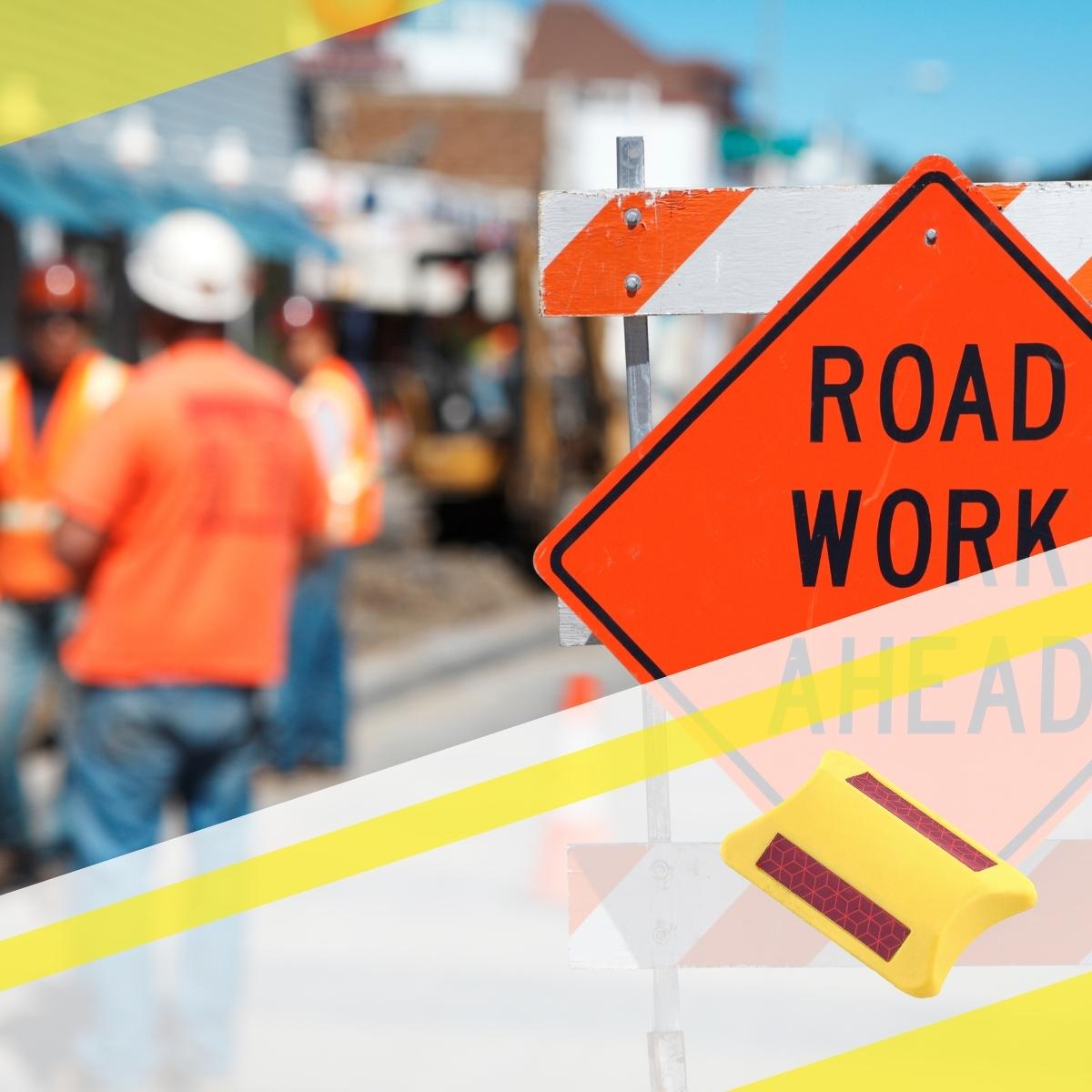
For long-duration road works or construction, cost-effective temporary road studs are necessary. Our locally produced Sitemarkers comprise high-impact ABS plastic and premium reflective tape.
They adhere to the road surface with two-ply PE bitumen tape for easy removal at your project’s end. COTO standard RSA-T requires that all temporary deviations and temporary demarcation requires temporary road studs.
Ensure Your Project Complies
Road stud classification is an important consideration. The municipality or Department of Traffic may withhold Payment for a project if the road marking is unsatisfactory. Ensure your studs are high quality and compliant with Venture Plastics Distributors.